Direct engagement requires more than intent. It requires an environment designed for the mission.
In Part 1 of this series, we introduced direct engagement: the practice of engaging with threats at their source to assess adversarial environments in real time and collect verified intelligence. We made the case that detection tools and threat feeds answer critical questions, but the work of verifying, contextualizing, and acting on those signals requires going to the source. The question is how.
And “how” matters, because direct engagement done poorly creates its own risks. Accessing adversarial infrastructure from your corporate network leaks attribution. Interacting with threat actors on forums or messaging platforms can tip them off. Downloading content for analysis can introduce malware. Without proper controls, the analyst becomes the vulnerability.
This post covers what a digital investigations platform needs to deliver so that analysts can engage directly, without exposing themselves, their organization, or their investigation.
The DIY approach and where it breaks down
Most teams start with what’s available: VPNs, virtual machines, burner devices, the TOR browser. These are reasonable starting points, and for certain tasks, they serve a real purpose. But as direct engagement becomes an operational requirement rather than an occasional need, the gaps become harder to ignore.
VPNs mask your IP address but don’t address browser fingerprints, device characteristics, or timezone mismatches. A VPN endpoint in Frankfurt doesn’t make your browser look like it belongs to someone in Frankfurt. Sophisticated platforms and threat actors can detect the inconsistency, and most commercial VPNs use known datacenter IP ranges that are routinely flagged or blocked.
Virtual machines isolate your local environment, but they can still egress from your corporate network and require ongoing maintenance, patching, and configuration. They don’t provide tight managed attribution, and when analysts need consistent, auditable environments, VMs become an IT management problem that scales poorly.
Burner devices and separate laptops solve isolation but create a different set of problems. They don’t scale either — there’s no centralized audit trail, and sharing evidence means moving files between air-gapped systems, which is very cumbersome.
The TOR network provides anonymity but at a cost. It’s slow. Many platforms actively block TOR exit nodes. TOR traffic itself can draw attention, which is exactly what you don’t want when the goal is to blend in.
Each of these tools solves one piece of the problem. None delivers a complete operational picture. The analyst ends up stitching together a fragile patchwork where a gap in any single layer can compromise the entire investigation.
What a digital investigations platform needs to deliver
A digital investigations platform must truly enable direct engagement. It’s the environment that makes it possible to go to the source safely, consistently, and at scale.
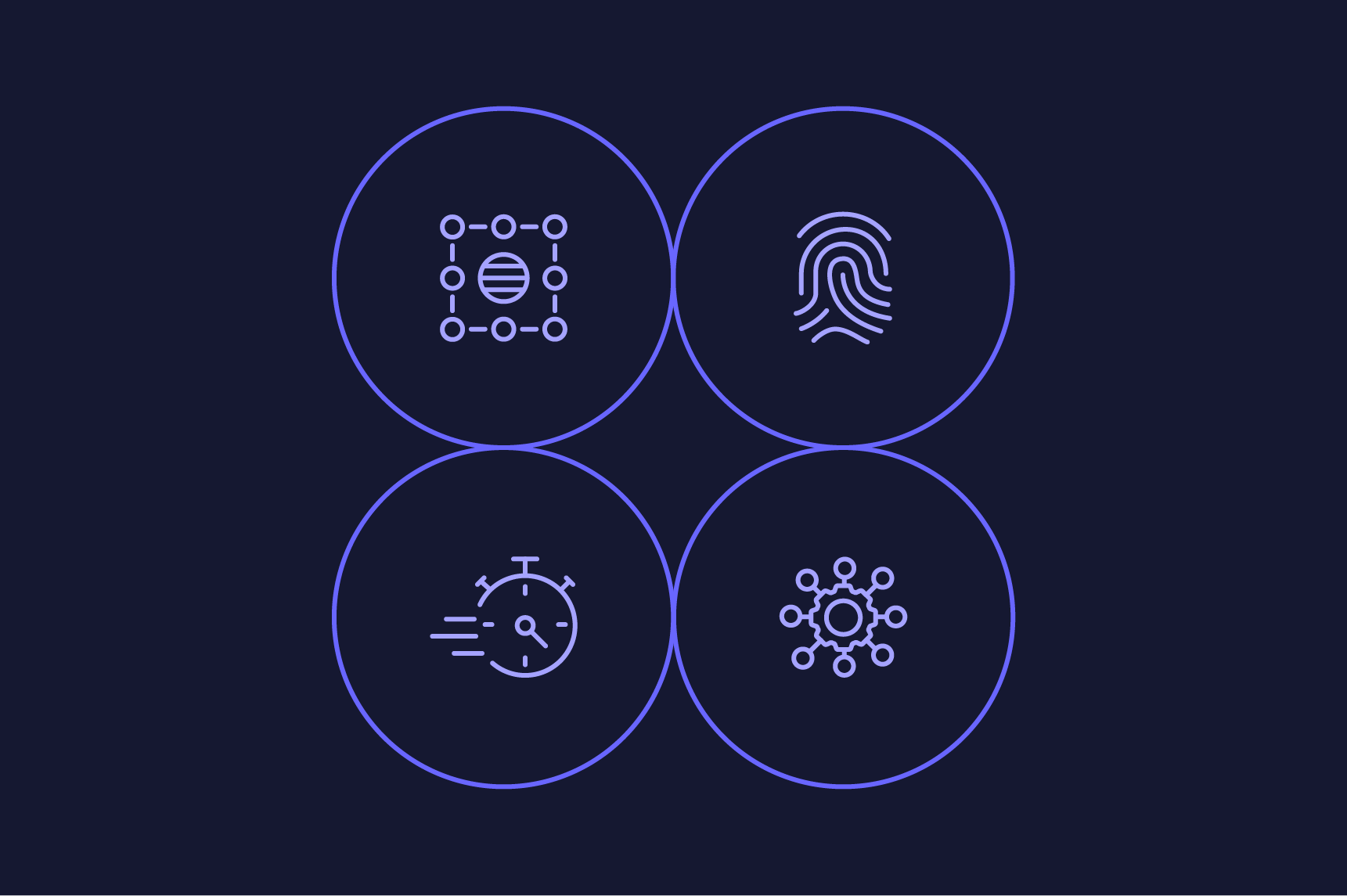
Based on what we’ve seen working with hundreds of organizations conducting investigations across every layer of the internet, the platform needs to deliver four things:
- Protection of the analyst, device, and network through isolation
- Authentic attribution that enables credible, regionally accurate access
- Accelerated workflows that reduce time to insight
- Centralized management for policy, visibility, and compliance
Protection of the analyst, device, and network through isolation
The most fundamental requirement is isolation. When an analyst accesses a phishing kit on a compromised domain, visits a dark web marketplace, or interacts with infrastructure controlled by a threat actor, nothing should touch their device or network. The investigation environment needs to be fully remote, executing all code in the cloud and destroying the session when the work is done.
This isn’t just about malware protection, though that matters. It’s about ensuring that the analyst’s device never makes a direct connection to hostile infrastructure. No cookies set on the local machine. No scripts executing locally. No artifacts persisting that could tie the investigation back to the analyst or their organization.
A CTI analyst investigating a live phishing campaign should be able to interact with the threat actor’s infrastructure, observe the full attack chain, and capture evidence without any risk of infection or exposure. That’s the baseline.
Authentic attribution that enables credible, regionally accurate access
Attribution management is what separates observation from effective investigation. It’s not enough to hide your IP address. You need to present a coherent digital identity that matches the context of your investigation.
That means geolocation with regional authenticity: an IP address, language settings, timezone, and browser fingerprint that are all consistent with someone actually located in that region. It means choosing the right network type, because a datacenter IP, a residential IP, and a mobile connection each carry different signals to the platforms you’re accessing. And it means being able to adjust these attributes quickly as investigations shift across regions and targets.
Consider an OSINT analyst monitoring a Facebook group where threat actors are coordinating activity in Southeast Asia. The content served, the groups surfaced, even the ads displayed differ based on where the viewer appears to be. Without regional access that presents authentic local characteristics, the analyst is seeing a filtered version of reality.
Or a fraud investigator tracking a counterfeit goods operation across regional e-commerce platforms that serve different inventory and pricing based on the buyer’s apparent location. The investigation requires seeing what a local buyer would see, not what a US-based corporate IP would see.
Accelerated workflows that reduce time to insight
Speed matters in investigations. Threat actor infrastructure goes offline. Dark web listings get pulled. Social media posts get deleted. The window for collection is often narrow, and every minute spent switching between tools, transferring files, or translating content is a minute when evidence can disappear.
A digital investigations platform needs integrated tools for the full intelligence cycle:. the analyst should be able to capture a screenshot, translate foreign-language content, cross-reference findings across multiple sites, and package a report without ever leaving the investigation environment.
This is also where AI is starting to change the game. The ability to run contextual AI analysis against the content you’re investigating, in real time, without exposing your research intent to an external AI provider, is a meaningful operational advantage. An analyst shouldn’t have to copy sensitive findings into a separate AI tool (and risk attribution in the process) to get analytical support. The AI should work inside the investigation, see what the analyst sees, and provide guidance without breaking the anonymity envelope.
A fraud investigator who discovers a counterfeit product listing on a regional marketplace needs to screenshot the listing, translate the product description, search for related listings across other platforms, and compile findings for the legal team. If that workflow requires four different tools across three different environments, it takes hours. Inside an integrated platform, it takes minutes.
Centralized management for policy, visibility, and compliance
Direct engagement, by definition, involves accessing risky and sensitive environments. That makes oversight non-negotiable.
Administrators need centralized controls over who can access what: which analysts can reach the dark web, which egress regions are available to which teams, what applications are permitted for use. They need full audit logging that captures analyst activity in encrypted, tamper-proof records. Organizations with compliance requirements, whether regulatory, legal, or internal, need the ability to demonstrate exactly what was done, when, and by whom.
This isn’t about restricting analysts — it’s about enabling them. A federal agency that needs its analysts to access dark web forums for counter-narcotics work can do so confidently when there’s a complete, auditable record of every session. An enterprise security team can approve direct engagement operations knowing that policy controls prevent scope creep and that every action is logged.
The organizations doing direct engagement most effectively are the ones that have solved this tension: maximum operational reach for the analyst, maximum visibility for the administrator.
Completing the stack
In Part 1, we described the complementary relationship between detection and direct engagement. Detection tools tell you where to look. Direct engagement tells you what’s actually there.
A digital investigations platform is what makes direct engagement operationally viable. It sits alongside your SIEM, your threat intelligence platform, your case management system. It doesn’t replace any of them. It completes the stack by giving analysts a secure, managed, and auditable environment to do the work that those tools can’t do on their own: go to the source.
The most effective risk teams we work with have moved beyond the question of whether they need direct engagement. They’ve answered it. The question they’re solving now is how to do it consistently, safely, and at scale. A purpose-built digital investigations platform is how.
Go from signal to certainty.
Detection tools surface potential threats. A digital investigations platform gives your analysts the secure, anonymous environment to verify what’s real, collect the evidence, and act with confidence.
Silo is the digital investigations platform trusted by 750+ organizations to protect, mask, and accelerate their online investigations.
See how Silo enables direct engagement.
Tags